
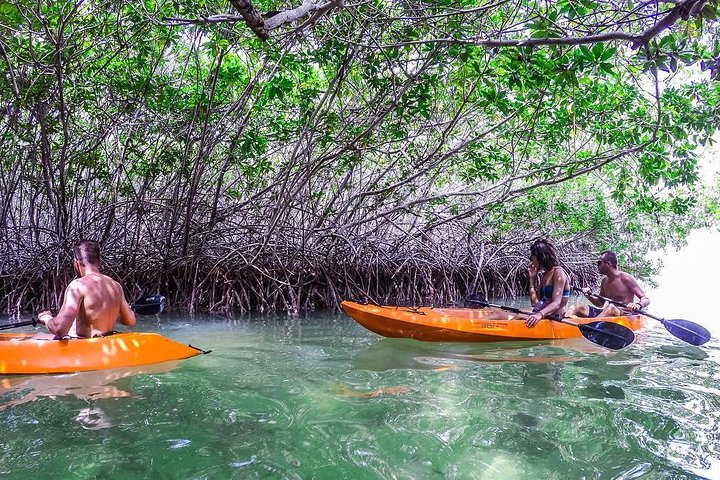




The Best Shore Snorkelling in the Caribbean
Bonaire’s reef system begins directly from the shore — in many places, you walk into the water from a rocky beach or a concrete pier and within 10 metres you are over living coral with tropical fish, sea turtles, seahorses, and octopus visible in water so clear that visibility regularly exceeds 30 metres. This shore-accessible reef — protected since 1979 as part of the Bonaire National Marine Park — is what makes Bonaire arguably the finest snorkelling destination in the Caribbean, and one of the best in the world.
The island’s leeward (western) coast is lined with over 60 officially marked dive and snorkel sites, each accessible from the shore via a painted yellow stone marker. The reef runs continuously along this coast, beginning in the shallows (1–3 metres of water over hard coral, sea fans, and brain coral) and dropping off at the reef edge (typically 10–15 metres from shore) into a wall that descends to 30+ metres. The shallow reef flat is the snorkelling zone — the deeper wall is the diving zone — and the transition between them is visible from the surface as the colour shifts from turquoise to deep blue.
What You Will See
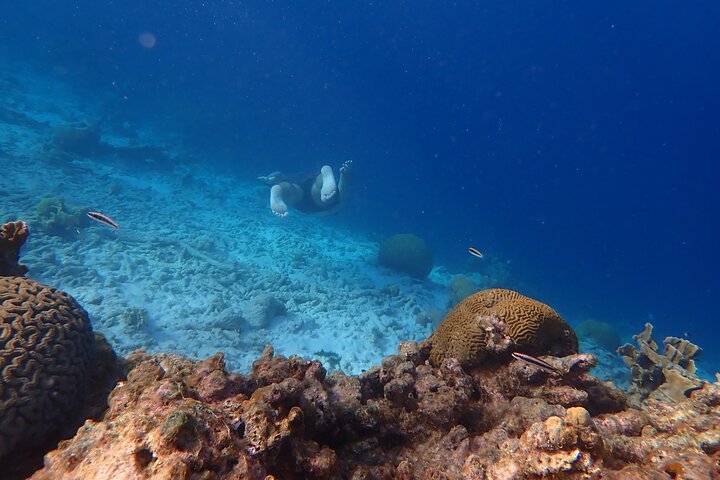
Hard corals — elkhorn coral (the large, branching formations in the shallows), brain coral (the rounded, grooved boulders), staghorn coral, and pillar coral. Bonaire’s reef health is among the best in the Caribbean, largely because the marine park regulations (no anchoring, no collecting, no touching) have been enforced for over four decades.
Sea turtles — green turtles and hawksbill turtles are common on Bonaire’s reefs. The turtles graze on seagrass and sponges in the shallows and are habituated to snorkellers — encounters at close range (within 2–3 metres) are routine rather than exceptional.
Tropical reef fish — parrotfish (the crunching sound of their coral-grinding beaks is audible underwater), trumpetfish, butterflyfish, angelfish (queen angelfish, French angelfish), damselfish, wrasses, and the occasional barracuda or tarpon in the deeper water.
Seahorses — Bonaire is one of the best places in the Caribbean to see seahorses in the wild. The longsnout seahorse is found on specific sites, and a guide who knows the reef identifies them (they are small and perfectly camouflaged — without a guide, you will swim past them).
Octopus — Caribbean reef octopus are present on many sites, visible as a colour-shifting presence emerging from crevices, particularly during morning and evening hours.
Top Snorkelling Sites
1000 Steps — despite the name, approximately 70 steps descend the cliff to a beach where the reef begins immediately. One of Bonaire’s most popular and most rewarding sites — hard coral in the shallows, sea fans on the reef slope, and frequent turtle encounters.
Te Amo Beach — near the airport, a calm, shallow site with easy entry and dense coral formations. Excellent for beginners and families.
Karpata — a stunning reef with large sponges, sea fans, and a dramatic reef wall. The entry involves steps down a rocky slope. Strong swimmers and experienced snorkellers get the most from this site.
Klein Bonaire (covered separately) — the uninhabited island offshore, accessible by boat, with Bonaire’s finest coral and the clearest water.
Lac Bay — a shallow, protected bay on the windward side, primarily a windsurfing destination but with seagrass beds that attract turtles and rays. A different snorkelling environment from the reef sites.
The Marine Park Tag
A Bonaire National Marine Park tag is required for all in-water activities (snorkelling, diving, kayaking, swimming on the reef). The tag is purchased at dive shops and at the marine park office. The fee funds the park’s conservation, enforcement, and monitoring programmes. Tags are valid for one calendar year. Entering the water without a tag is a violation and fines are enforced.
Practical Tips
The reef starts from the shore — no boat is required. This is Bonaire’s defining advantage. You drive to a site, park, walk in, and you are snorkelling on a world-class reef within minutes. The freedom to snorkel any site, any time, at your own pace, without booking a boat or joining a group, is what brings snorkellers back to Bonaire year after year.
Rent a vehicle (truck or SUV recommended). The snorkel sites line the coast road and many are accessed via unpaved tracks. A rental vehicle gives you independence to visit multiple sites per day. Most accommodation includes free parking.
Use reef-safe sunscreen or — better — wear a rash vest. Bonaire’s marine park regulations increasingly favour physical sun protection (rash vests, hats) over chemical sunscreens, which damage coral. A long-sleeved rash vest eliminates the sunscreen question entirely and provides the most effective UV protection for snorkelling.
Do not touch, stand on, or collect anything from the reef. This is not a suggestion — it is a marine park regulation, enforced by rangers, and the foundation of the reef’s health. Coral is alive. Standing on it kills it. Fin contact breaks branches that took decades to grow. Maintain buoyancy, keep your fins up, and admire from a close but contactless distance.
The leeward coast is calm; the windward coast is rough. The western (leeward) coast is sheltered from the trade winds and has calm, clear water suitable for snorkelling most days. The eastern (windward) coast is exposed to open-ocean swell and is generally not suitable for snorkelling.
Bring your own snorkelling equipment or rent on-island. Dive shops across the island rent quality masks, snorkels, and fins. If you snorkel frequently, bringing your own well-fitting mask is worth the suitcase space — a good mask seal is the difference between an enjoyable snorkel and a frustrating one.
Frequently Asked Questions
Is Bonaire good for snorkelling?
Bonaire is widely regarded as the best shore-snorkelling destination in the Caribbean and one of the best in the world. The reef is accessible directly from the shore, the water clarity regularly exceeds 30 metres, the coral is healthy (protected since 1979), and the marine life — turtles, seahorses, octopus, and hundreds of fish species — is abundant.
Do I need a boat to snorkel in Bonaire?
No. The reef is accessible directly from the shore at over 60 marked sites along the leeward coast. This shore-access model is Bonaire’s defining advantage. Boat trips to Klein Bonaire access additional reef sites with the island’s finest coral.
How much does a Bonaire marine park tag cost?
The tag fee varies (check current pricing at the marine park office or dive shops). It is valid for one calendar year and is required for all in-water activities. The fee directly funds reef conservation and protection.
Is snorkelling in Bonaire suitable for beginners?
Yes. Many sites (Te Amo Beach, Buddy’s Reef, the Town Pier area) have calm, shallow water with easy entry and abundant marine life close to shore. The warm water (27–29°C year-round), the clarity, and the calm leeward conditions make Bonaire exceptionally beginner-friendly.
What is the best time of year for snorkelling in Bonaire?
Bonaire is a year-round snorkelling destination. The water temperature is 27–29°C throughout the year. Visibility is consistently high. The dry season (February–September) has the calmest conditions. The wet season (October–January) brings occasional rain showers but the leeward snorkelling conditions remain excellent.
Can I see turtles while snorkelling in Bonaire?
Yes. Green turtles and hawksbill turtles are common on Bonaire’s reefs and regularly encountered while snorkelling. The turtles are habituated to human presence and often continue feeding while snorkellers observe from a respectful distance. Specific sites (Klein Bonaire, 1000 Steps, Karpata) have particularly frequent turtle sightings.